
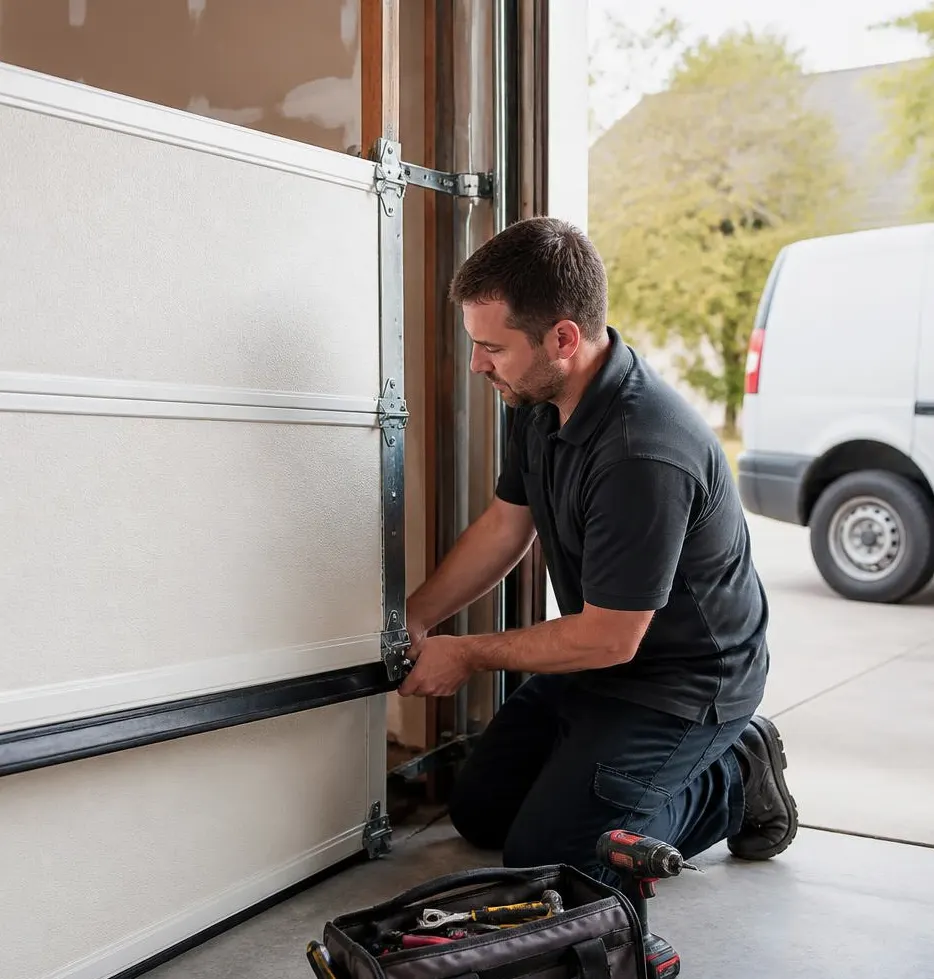
The Mistake Almost Everyone Makes First
The door won't budge, so the instinct is to hit the remote again. And again. When that doesn't work, people hold the wall button down, as if the opener just needs a little more encouragement. It's tempting because the opener is the obvious suspect — it's the thing making noise, and pressing a button is easier than troubleshooting. But if the door is physically frozen to the slab or the rollers are gummed up with cold, stiff grease, the opener isn't the problem. It's just the thing that takes the damage. Plastic drive gears inside openers are a known weak point, and repeatedly forcing a jammed door is one of the fastest ways to strip one. That turns a five-minute fix into an opener repair.
What You'll Actually See
- The door looks sealed to the garage floor, especially after an overnight freeze following rain
- The door opens but drags, jerks, or moves noticeably slower than usual
- The opener motor hums or strains, then stops partway through the cycle
- You hear a loud clunk or pop, then the door won't move at all
- The remote and wall button both work, but the door barely lifts before reversing
None of these point straight to one cause. That's why a technician works through them in a specific order, starting with the simplest and most common.
1. Ice Sealing the Bottom to the Slab
This is the first thing checked, because it's the most common cause after a cold, wet night. The rubber weatherstripping along the bottom of the door sits in a thin film of water, and when temperatures drop, it freezes solid to the concrete. The door looks stuck shut, but mechanically everything is fine.
The fix: never force it with the opener or pry it with a bar — that bends the bottom panel or track. Instead, break the ice bond gently, using a plastic scraper or lukewarm (not boiling) water poured along the seal line. Once the door runs freely, check the weatherstripping itself. If it's cracked or flattened, which happens fast in a climate that sees months of standing moisture, it's worth replacing before the next freeze.
2. Cold, Dirty Lubricant on Tracks and Rollers
Grease that's thin and workable in October can turn gummy once temperatures drop, especially when it's mixed with the dirt and moss debris that blows into tracks during a wet fall. The rollers bind slightly, and the opener has to work harder to pull the door through its travel — which is often what people mistake for an opener problem.
The fix: clean the tracks and rollers with a dry cloth to remove old grease and grit, then apply a lithium or silicone-based lubricant made for garage doors. Skip anything petroleum-based or spray lubricants like WD-40 — they attract dust and break down faster in damp conditions.
3. Springs Under Extra Strain
Torsion springs lose a small amount of flexibility in cold weather, and a spring that's already fatigued or rusted — common here given months of damp air — is far more likely to bind or fail when it's cold than when it's warm. If the door feels unusually heavy, stops partway and won't continue even after the ice and lubrication issues are ruled out, this is next on the list.
The fix: a technician checks tension and looks for rust pitting or visible gaps in the coils. A spring showing wear isn't something to lubricate and hope for the best — it gets replaced, since a spring failure under load is a safety issue, not just an inconvenience.
4. Opener Gear Wear and Travel Settings
If the door is physically moving freely once it's clear of ice and lubricated, but the opener still struggles, strains, or reverses early, the issue is likely in the opener itself — worn gears, a slipping chain or belt, or travel-limit settings that were fine in summer but are now too sensitive to the extra resistance of a cold door.
The fix: inspect the gear and drive mechanism for wear, and adjust force and limit settings so the opener isn't mistaking cold stiffness for an obstruction.
5. Track Alignment and Panel Condition
Last on the list, because it's the least common cause, but worth checking on older wood doors: moisture swelling or early rot can throw a panel slightly out of true, which binds against the track more noticeably once cold tightens everything up. This is a slower-developing issue, not something that shows up overnight.
When to Call Federal Way Garage Door
If you've cleared the ice and the door still drags, strains, or won't complete a full cycle, it's time to call. We'll run a full diagnostic — checking seals, rollers, spring tension, and opener settings in that order — rather than guessing. A seasonal Garage Door Maintenance visit before the next hard freeze catches most of this before it becomes a stuck door at 6 a.m., and if a spring is showing wear, our Spring Replacement service handles it safely the same day.
If your garage door is fighting you this winter, call Federal Way Garage Door — proudly serving Federal Way, WA and the surrounding area.